



Market Commentary – March 16, 2026
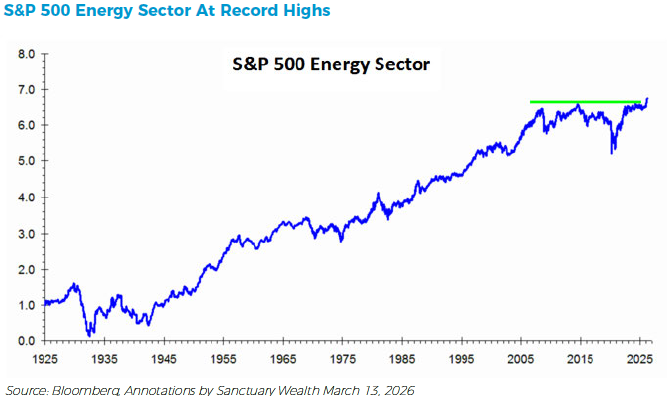
The conflict in the Middle East has focused the market’s attention on energy. Energy’s weight in the S&P 500 has shrunk dramatically over the past five decades.
In the late 1970s, energy stocks made up about 25% of the index. Today, the sector accounts for only 3.5% of the S&P 500. The U.S. is energy independent which positions the economy in a different way from the 1970s. When we look at the Energy sector its lower exposure also means today’s oil shock hit the broad market less directly than in past crises. So far, higher oil prices have benefited Energy—it’s the best performing sector year-to-date—up nearly 30%. Volatility in oil prices matters for inflation, input costs, and related sectors, along with disposable income for consumers.
Energy and Energy Products Are Not Moving In The Strait
The U.S. Navy has stated it is not currently escorting commercial tankers through the Strait of Hormuz, where roughly 20% of the world’s energy supply transits daily. With this critical passageway effectively blocked, oil markets are under stress and energy prices are rising. The longer the disruption persists, the more likely oil prices will remain high and possibly go even higher. Recent Navy briefings have cited the heightened risk of Iranian attacks as making escorts too dangerous at this time. While escorts could resume if risks ease or military priorities shift, no protection is currently being provided. As a result, insurance providers are either refusing coverage or pricing it prohibitively for vessels transiting the Strait, sharply reducing commercial traffic and keeping WTI crude oil elevated, testing levels near $100.
Keep reading:
 Loading...

 Reload document
  Open in new tab